
The 100 Words Project
Send us your 100 words (4-5 sentences) describing your relationship with southwestern Oregon wildlands and why you oppose mining. Your words will be added to a booklet to be circulated on social media and sent to newspapers, radio, TV, legislators, the agencies and the mining company. Learn more below.
Share your story by participating in the 100 words project
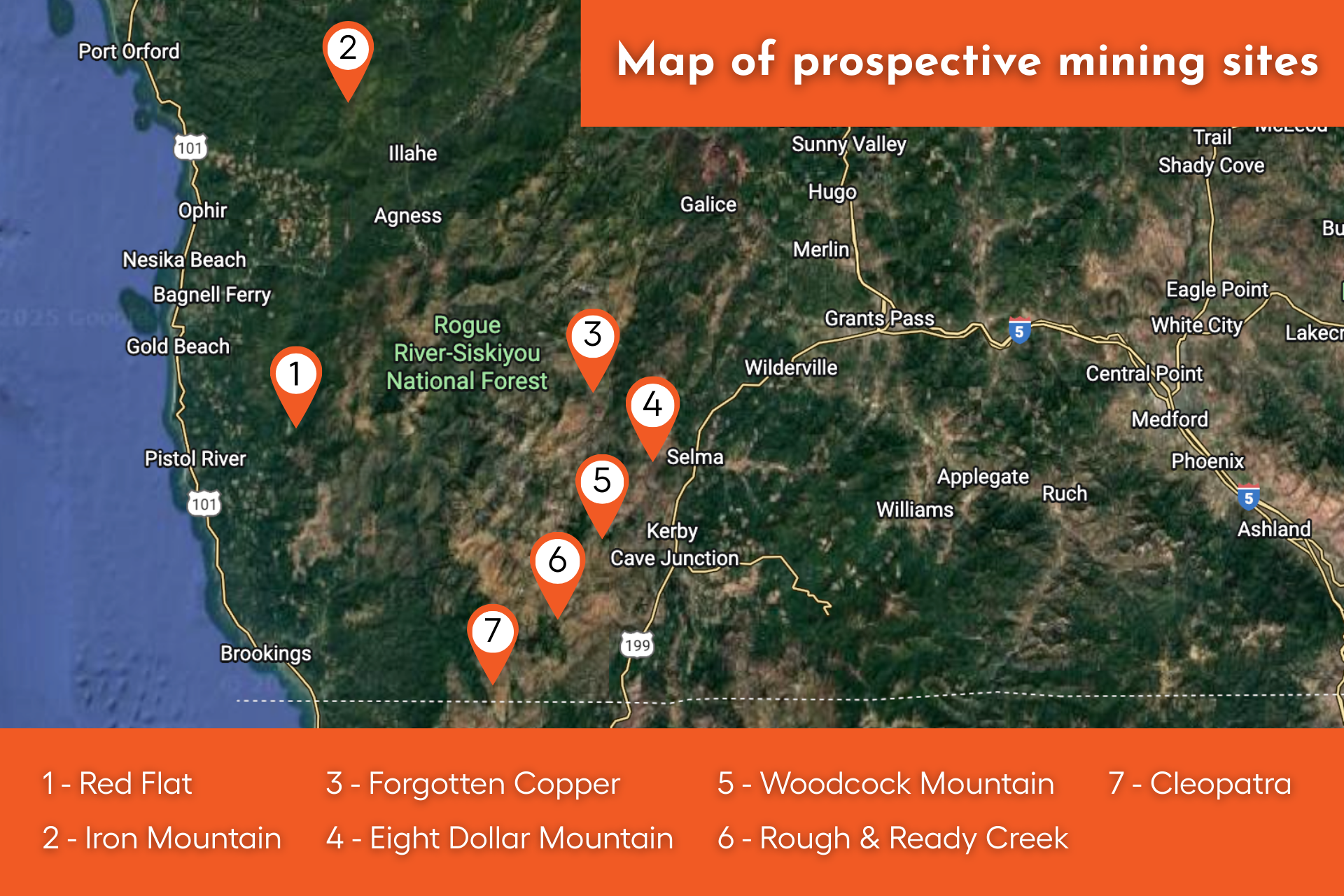
Map with pins of current proposed mining sites. Click image to enlarge.
The foreign mining company Homeland Nickel wants to convert 17,000 acres of OUR public lands in southwest OR into a Massive Industrial Nickel Mining District on 9 to 11 sites. Half of these sites are in the Illinois Valley; the others are closer to the Kalmiopsis Wild Rivers Coast. Devastating our last remaining best places to feed increasingly obsolete industrial demands is unnecessary.
We are asking you to send us your 100 words (4-5 sentences) describing your relationship with these wildlands and why you oppose mining. Your words will be added to a booklet to be circulated on social media and sent to newspapers, radio, TV, legislators, the agencies and the mining company. These public lands belong to all Americans.
Please, describe who you are (or provide your title): tell us if you're a teacher; student; homemaker; carpenter; office clerk, farmer; firefighter; nurse; retiree; pet sitter, etc.: We're presenting a well-rounded bi-partisan snapshot. Then email your 100 Words to protectourwildrivers@gmail.com
Facts & Inspiration

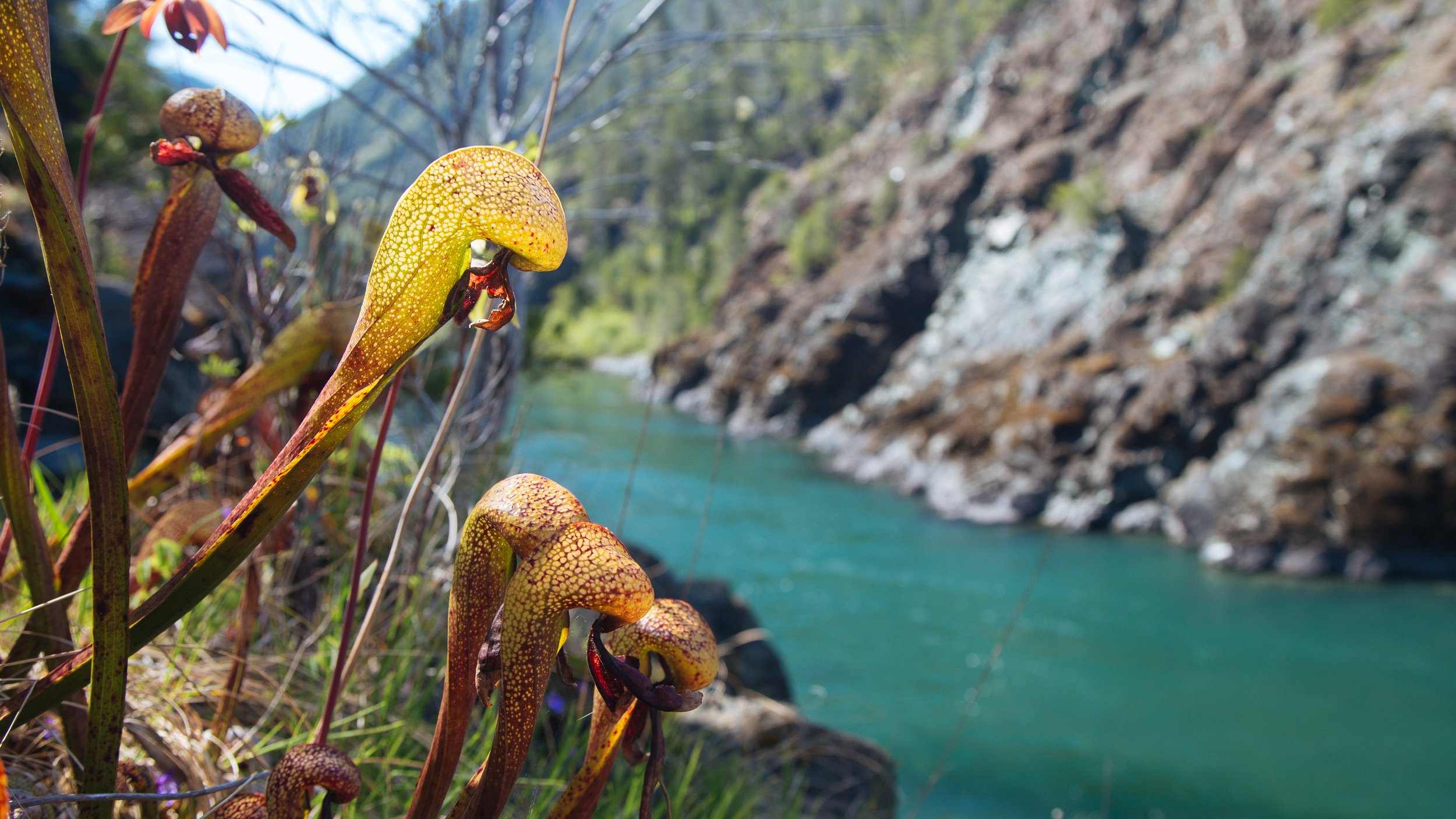
The Wild & Scenic Illinois River from Eight Dollar Mountain Botanical Area
Explore information about mining here:
-
It's physically impossible to strip mine and process nickel without damaging air, lands, waterways and wildlife. Noise, toxic dust and heavy truck traffic would also result. The character of life in the still-pristine and amazingly biodiverse wonderlands of SW Oregon would forever change. This threat is uniting communities. Residents and visitors alike share a commitment to protect our public lands from the ravages of hardrock mining.
According to the Environmental Protection Agency, "the metal mining industry is classified as the nation's most toxic and chemically destructive industrial sector." The EPA also says "abandoned mines have contaminated 40% of western watersheds and 50% of lakes."
Nickel mining and inadequate restoration efforts in Riddle, Oregon left behind a mess - and the Glenbrook Nickel Smelter near Riddle ranked among the largest toxic polluters in Oregon. Plus, the nearby Formosa Mine was declared a Superfund site.
-
The mining industry is increasingly automated and the nationwide trend is for big mining operations to bring in trained technicians, geologists and engineers for two-week or month-long shifts. There'd likely only be some general labor and truck driving jobs.
-
Nickel is endlessly recyclable - you can't destroy the stuff! Metal recycling is profitable and much more energy-efficient than mining and refining virgin ores. Resource recovery and innovation is the way of the future! The math is simple: the nickel content found in Oregon's soils and rocks is 1% or less. Meanwhile scrap stainless steel contains anywhere from 8-14% nickel.
According to the U.S. Geological Survey, in 2025, nickel recovered from scrap accounted for 60% of apparent U.S. consumption. There's over 500 independent metal recycling companies operating more than 1,000 processing facilities nationwide.Industry promotes a false narrative by saying that recycled nickel can't satisfy future demands. For example, electric vehicle battery technology is fast-moving towards other source materials.