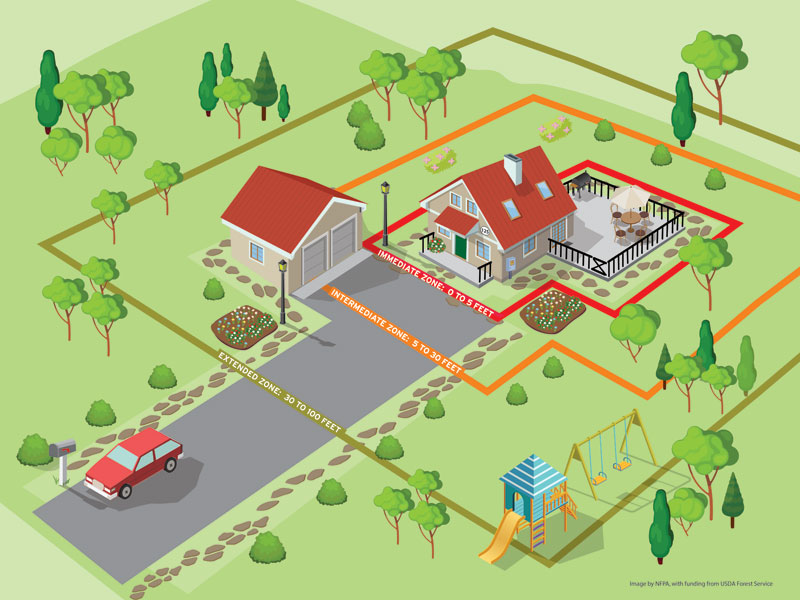
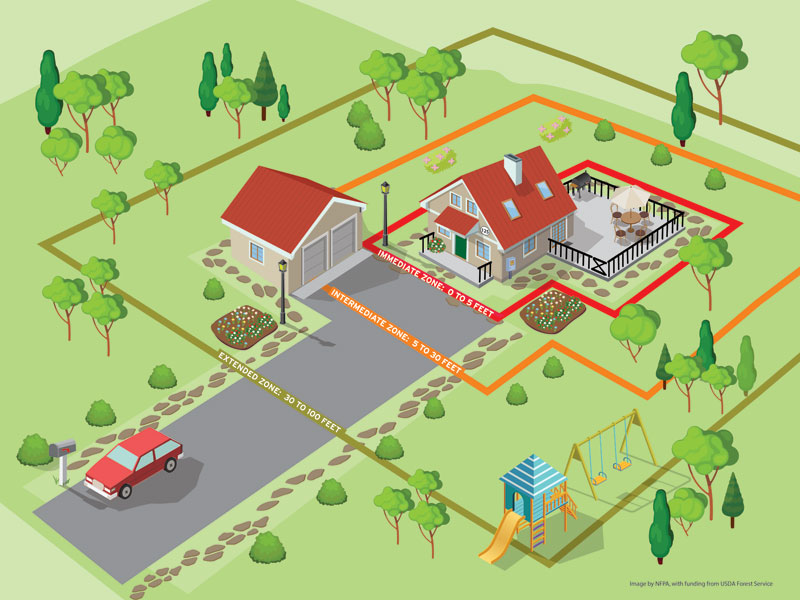
The rate of development in forested and fire prone landscapes has left communities vulnerable. Here we focus on defensible space and available resources to help landowners minimize fire threats in the Wildland Urban (or Rural) Interface.
Panelists: Janet Lancaster, Co-Founder Firesmart Merlin; Rich Fairbanks, Fairbanks Forest Management; David Fergsuson, District Conservationist, National Resource Conservation Service
Click Here to Register
David Ferguson has worked for the Natural Resources Conservation Service since 2004. He is a member of the Klamath-Lake County Forest Health Partnership and the Umpqua Oak Partnership. David was the lead conservationist for the Taylor-Klondike wildfire recovery project and is currently for many other projects in both Josephine and Douglas counties.
Janet Lancaster is a community organizer and wildfire preparedness advocate. Months after retiring to Merlin in 2018, the US Forest Service published a report naming Merlin the community most at-risk of wildfire in Oregon. This began her quest to learn - and share with her community - what homeowners can do to prevent, prepare for and survive wildfire. She co-founded Firesmart Merlin in January 2019, which offers free community meetings on wildfire readiness and related topics.
Rich Fairbanks is a local fire professional and speaks about the importance of securing a perimeter and how creating and maintaining defensible space around homes is a year-long process. Even in the summer when we won’t be doing controlled burns or running a chainsaw, there is much we can do to protect homes, communities, and lives from fire. Rich lives in southwest Oregon and has over 40 years of experience in firefighting and forest management, including in our local Rogue River-Siskiyou National Forest.
Read more about this topic:
The rate of development in forested and fire prone landscapes has left communities vulnerable. The final webinar in our Summit focuses on defensible space and available resources to help landowners minimize fire threats in the Wildland Urban (or Rural) Interface.
Wildfires respond to weather, topography and fuels. We cannot control the weather, the topography is pretty static, what we can manage is the fuels. In the Wildland Urban Interface (WUI) of Southern Oregon, that usually means residents will need to manage mixed conifer second growth. What follows is advice for property owners that live in those mixed conifer forests.
- Posted in Fire & Climate Summit
- Tagged Wildland Urban Interface