
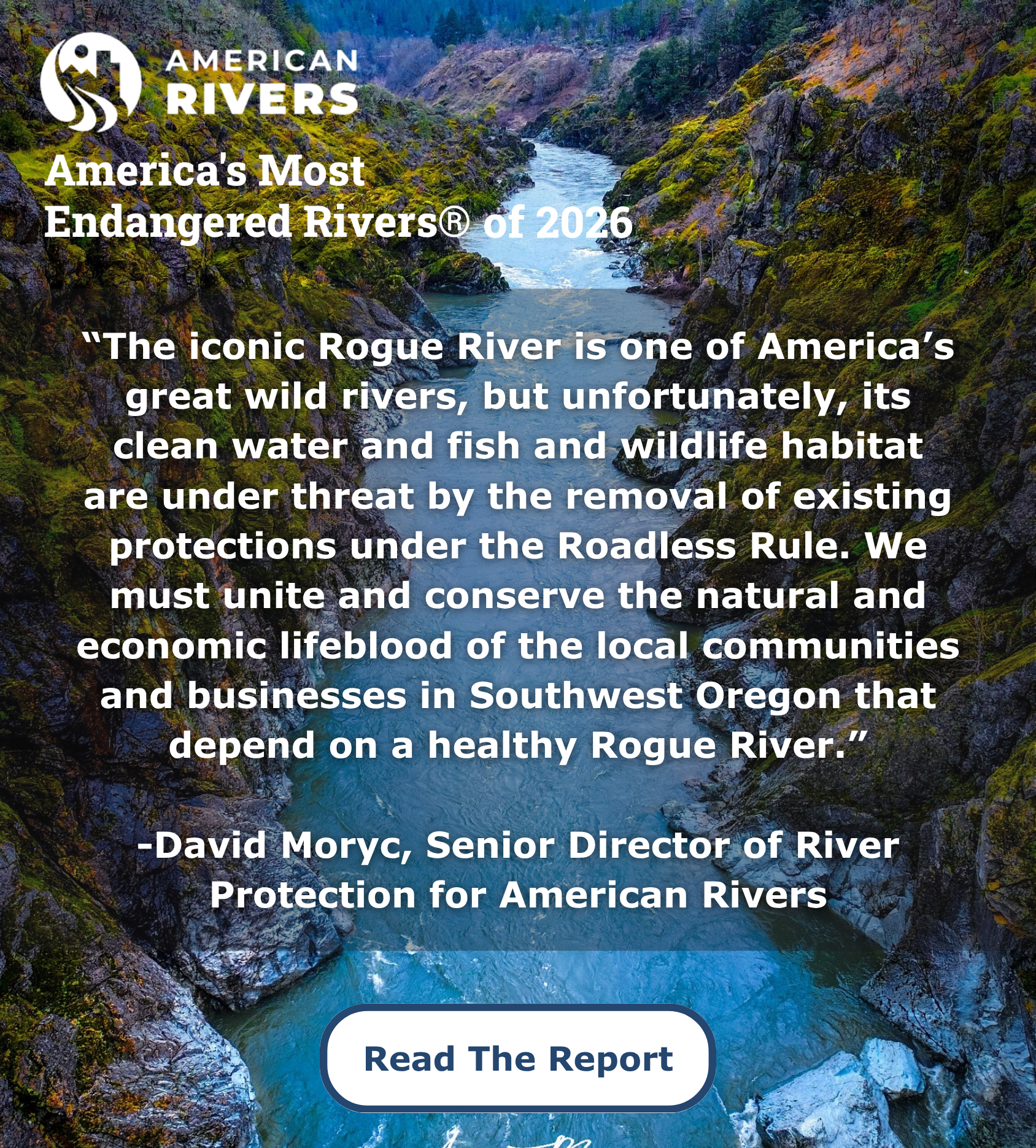
The Rogue River named one of America's “Most Endangered Rivers"
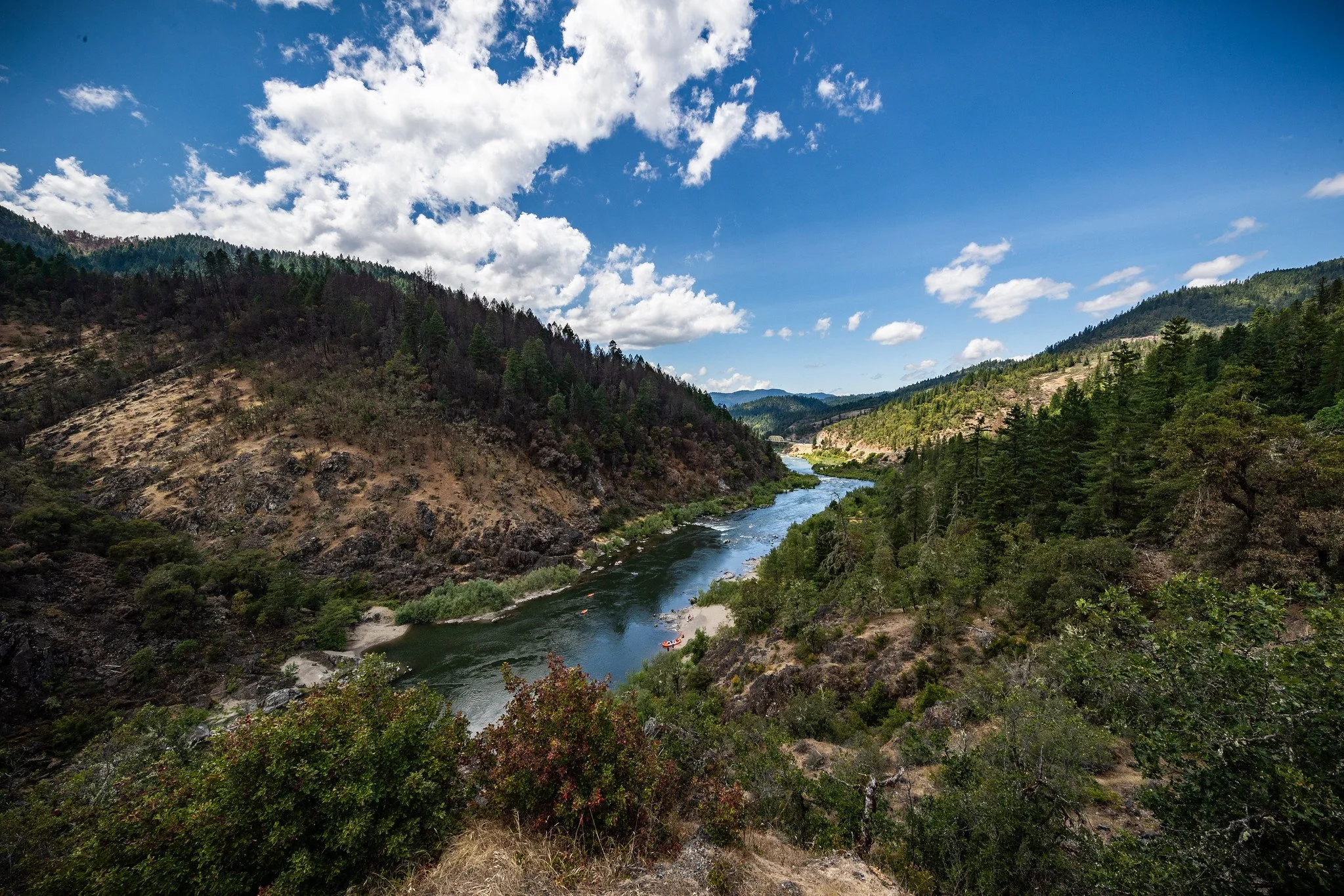
The Rogue River. Photo: Greg Shine
Written by Frances Oyung, Rogue Riverkeeper Program Staff
This spring, a national conservation organization, American Rivers, included the Rogue as one of America’s “Most Endangered Rivers”. KS Wild and Rogue Riverkeeper nominated the Rogue for this list because as the local advocates who work closely on the issues threatening this river, we believed it should be considered. The role of KS Wild and Rogue Riverkeeper amongst the broader conservation work in the US is to serve as the advocates who are rooted in these watersheds and are deeply familiar with what is happening here. The Rogue, having been one of the first rivers designated under the Wild & Scenic Rivers Act in 1968, is of national importance. It is vital that those of us here working to preserve and protect it communicate to others, including those outside our region, when we see significant threats to its integrity.
Every year, the “Most Endangered Rivers” list serves as a call to action for the rivers we all depend on throughout the US. We all need clean, safe water — regardless of what watershed we live in. Much of our water for all kinds of uses comes from rivers, which also provide crucial habitat for fish and wildlife, with recreational and economic value that create opportunities for many rural communities.
The goal of the Most Endangered Rivers list is to bring attention to the threats facing many rivers across the United States. Being included does not label a river as "the worst," but indicates that it faces serious threats such as dams, pollution, watershed logging, mining, or the impacts of climate change and development. These stressors can leave rivers unhealthy and unable to support natural and human systems. Ultimately, the list serves as a call to action to protect the vital lifelines we all depend on.
Why the Rogue?
The Rogue River is on the Most Endangered Rivers list because right now, the Rogue River is facing numerous threats from multiple sources:
Mining Threats: Corporations have a newfound interest in nickel mining in the Illinois River which could result in stripmining in the Rogue’s largest tributary. Canadian company Homeland Nickel has staked over 10,000 acres of federal mining claims across multiple sites in the Illinois River watershed. Click here to learn more about the foreign mining threats on the Rogue, Illinois, and other local watersheds.
Increased Logging: The Bureau of Land Management, which manages over 870,000 acres in the Rogue basin, is seeking to revise its Western Oregon Resource Management Plan and increase logging to nearly four times its current level — back to the unsustainable logging outputs of the past which prompted many of the critical environmental protections we use today. As the Rogue basin still holds old growth and mature forests, these areas are likely candidates to be targeted for the volume of timber the agency is seeking to profit off of, impacting riparian forests and tributaries that feed the Rogue River throughout the basin.
Removal of Roadless Wildlands: The US Forest Service seeks to rollback the long-standing Roadless Rule, which not only protects watersheds from the environmental impacts of road building itself but protects forests from the increased wildfire risk that comes with roaded landscapes and increased logging that comes from opening up unroaded landscapes.
How did the Rogue get on the Most Endangered Rivers list?
When a large organization like American Rivers is looking at rivers all over the country to assess the threats to them, they work with local advocates and communities who know these rivers. American Rivers connects with partner organizations rooted in watersheds like Rogue Riverkeeper and KS Wild to learn and then seek to highlight the urgent threats and the solutions needed to protect the rivers that sustain us all. The Most Endangered Rivers report draws attention to the threats, not just for the rivers on the list, but for all rivers in the US.
What do we need to do to protect the Rogue?
Protecting the Roadless Rule: When the comment period for the Roadless Rule opens this summer, we must urge Congress to support existing protections for Roadless Areas. We need robust public engagement and full transparency from the US Forest Service regarding these public lands. For example, the North and South Kalmiopsis—one of Oregon’s largest Roadless Areas—is located in the Illinois/Rogue watershed. Removing its protections would impact at least 200,000 acres of wild habitat and clean water sources, increasing the likelihood of harmful logging and the risk of fire in roaded landscapes.
Eliminating Roadless Rule protections could significantly degrade habitat and increase water temperatures in the Rogue River watershed. This also elevates wildfire risk, as fires are four times more likely to start in areas with roads than in roadless forest tracts. Nationally, over 90% of all wildfires occur within a half-mile of a road.
In the early 2000s, when the Roadless Rule was proposed and enacted, it received widespread community support with over 1.6 million public comments submitted in support of protecting the very few roadless, wild landscapes our nation has left. This is the type of energy and support it will take to keep the Roadless Rule and the forests it protects standing.
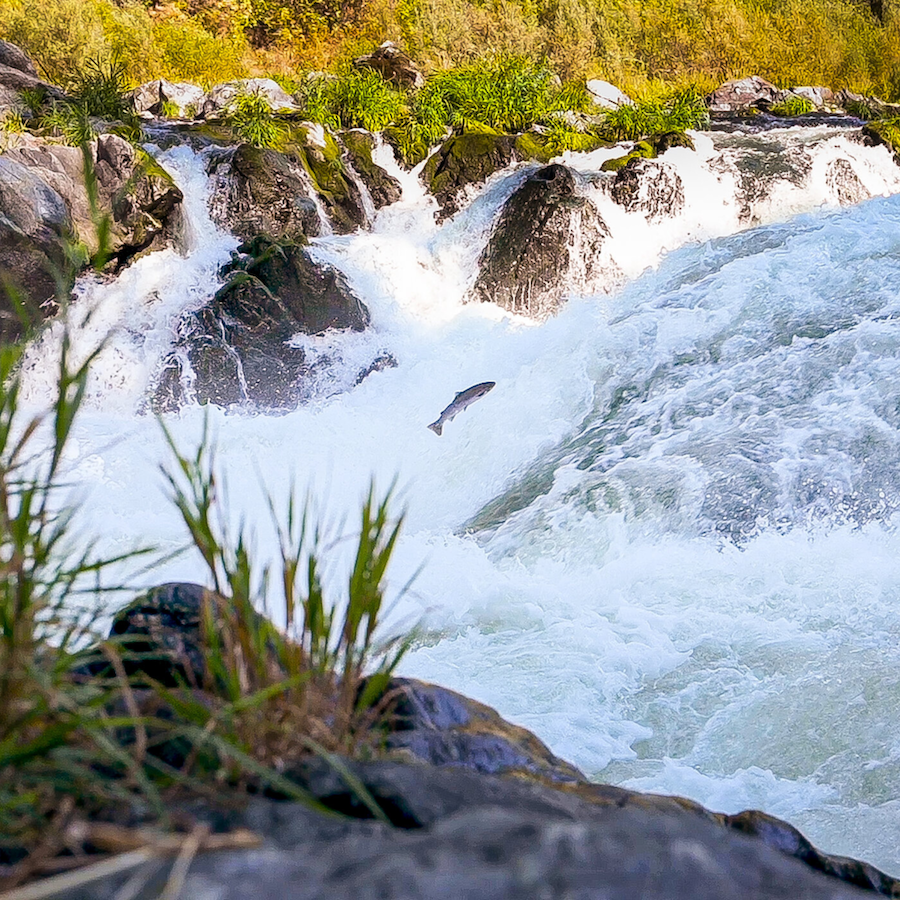
The Rogue River and its tributaries are vital waterways for native fish and other aquatic species. Credit: Holly Christiansen
The U.S. Department of Agriculture is required to consider public input on its process to review the environmental impacts of its proposal as a part of its Draft Environmental Impact Statement expected to be issued by the summer of 2026. The public must urge the agency to uphold existing protections under the Roadless Rule that help prevent harmful logging, mining, and road-building that will increase catastrophic wildfire risk.
Defending Forests from BLM Profit Logging: The Bureau of Land Management is also required to consider public input on a revised Resource Management Plan. When the comment period opens, we need to urge the agency to maintain these lands for multiple use, and not just management as a timber resource. These backyard forests encompass a large portion of the Rogue watershed, so protecting tributary streams and forests are critical to protecting water quality, aquatic habitats and biodiversity.
Protecting Waterways from Foreign Mining Threats: At this time, there is no planned period to comment on any proposals for mining in the Rogue. However, KS Wild is closely tracking impending exploratory drilling operations and are prepared to let supporters of clean water know when there will be an opportunity to provide input to the Rogue River Siskiyou National Forest, where this mining on public lands would occur. We are also working to have the Oregon Dept. of Environmental Quality designate sections of the Rogue watershed as “Outstanding Resource Waters” which is the most protective designation the state of Oregon can provide. By using as many tools in the toolbox as we can to protect and preserve the values we cherish in the Rogue, KS Wild and Rogue Riverkeeper works to sustain the Rogue for generations.

Stay Informed to Take Action
To stay informed on ways to protect the Rogue River basin, sign up for our email updates.
We will send you direct links to submit comments and engage in the public processes as we work together to defend the Rogue and its watershed from the many threats that have named it one of America’s Most Endangered Rivers.