Make your voice heard: Join your local community in Curry and Josephine County to speak out to Senator Merkley! Now is a critical time for southern Oregon to engage and support issues that matter to our forests, environmental laws, and communities.
Guest author Pepper Trail portrays 278 years of life, based on the true story of a Ponderosa Pine as told through it's growth rings. Read the life history of this tiny pine’s world, a valley in the eastern Siskiyou Mountains.
The Klamath National Forest has a bad track record of post-fire clearcutting. Now they are proposing a 1,700 acre post-fire clear-cut on the beloved and ecologically important Siskiyou Crest. Read more about it...
What have we learned since the 2002 Biscuit fire aftermath, and how will it affect land management decisions in the post-Chetco Bar burn area of southwest Oregon?
...with the passage of time it is now possible to look back more objectively at Biscuit fire and the political firestorm that followed in its wake.
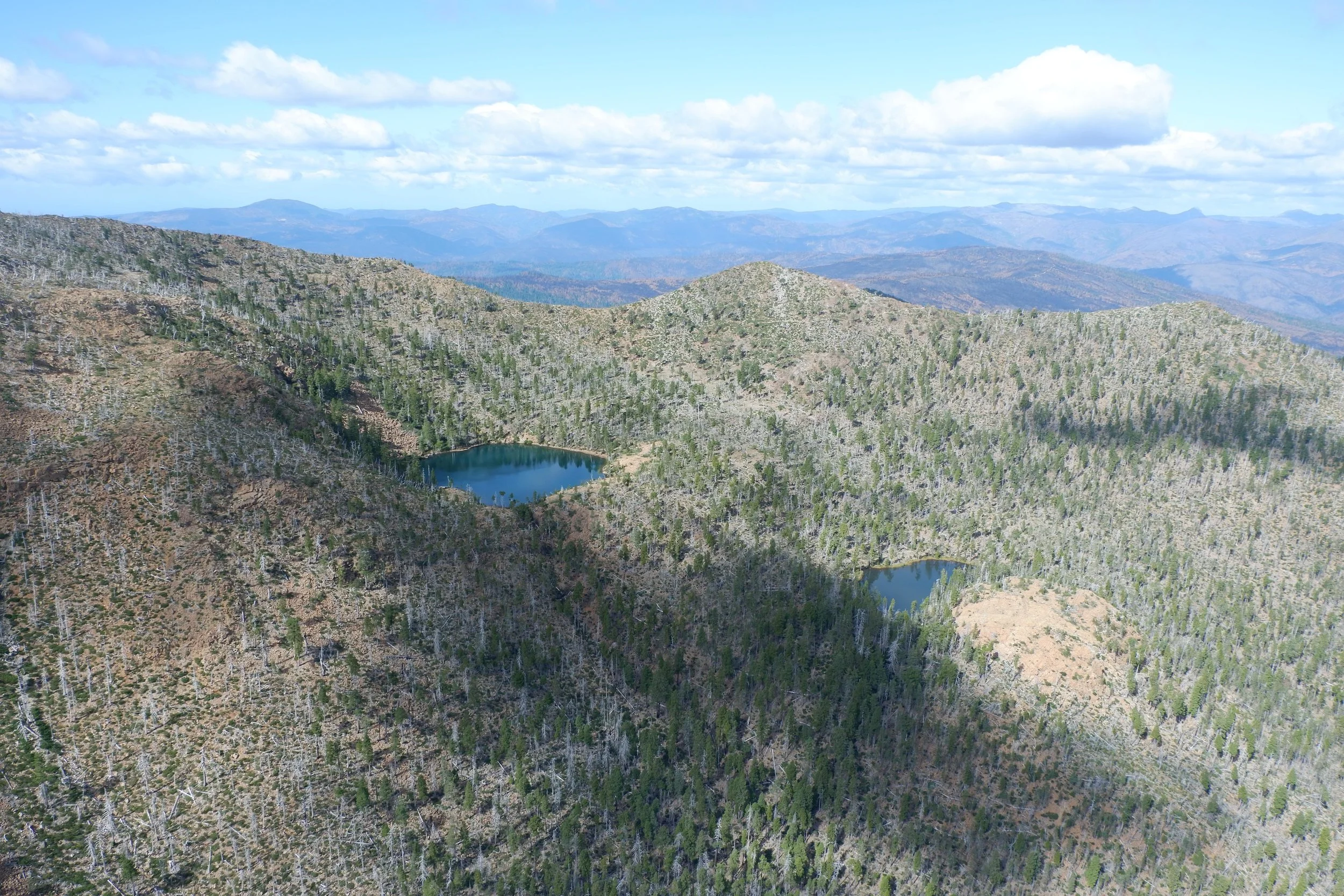
A forest after fire is not a tragedy; it’s simply a stage in the life of the forest. Post-fire logging is often framed as focused on fire prevention. In reality, important biological characteristics are removed from post-fire forests. Because of this, salvage logging acts as an unnatural human disturbance to the sensitive post fire landscape.
Fighting fossil fuel projects like the proposed Jordan Cove liquefied natural gas export project is only half of the climate change battle in our region. Climate change is getting worse fast so we also have to act to prepare the Klamath-Siskiyou for a warming world. KS Wild has just assembled the best available science in a comprehensive report to help show the path forward to help public lands adapt to climate change.
Fire is so important to the world-renown forest diversity of the Klamath-Siskiyou that it is recognized as the keystone ecological process. Here in the KS, forests with fire are healthy forests!
While hiking the mountains of Southern Oregon field biologist John Villella shared his dream with artist Deb VanPoolen, and less than a year later a masterpiece was born! Highlighting the extreme biodiversity and dazzling local audiences, "Butterfly Diversity of the Cascade-Siskiyou" was released just prior to Trump Administration's threats to remove protections for the Cascade-Siskiyou National Monument. Now, the painting's influence will live on - let's find the right home for it!
The science is clear that logging big, fire-resilient trees in old-growth forests increases fire hazards. At the same time, thinning dense forests, especially near communities, can reduce fire hazards, save homes, and give firefighters a leg up.
Following decades of fire suppression and logging that created dense young forests, a return to ecosystem resiliency requires thinning second-growth plantations, retaining large trees and forest canopy, and returning the role of fire to these fire-dependent forests.
Increasingly timber interests, conservationists including KS Wild, scientists and federal land management agencies are coming together to focus logging activities on thinning previously logged plantations and in fire-evolved forest stands in which fire suppression has resulted in encroachment by less resilient off-site conifers.
Few experiences are more evocative of the Pacific Northwest than the sight of a salmon leaping a waterfall. People gather to watch as they make their way to ancestral spawning grounds each year at Rainie Falls on the Rogue River or the mouth of Wooley Creek on the Salmon River. Some rivers of the Klamath-Siskiyou are strongholds for wild salmon, including the federally listed Northern California/Southern Oregon Coho Salmon
At KS Wild, we have a deep admiration for this creature that so deeply epitomizes the wilderness. Unfortunately, the story of the wolf is one of systematic persecution and deep-rooted mythologies that inspire fear in people. Some say the removal of the wolf is a bitter reflection of our society’s tendency to suppress all things wild; others, want nothing more than to allow wolves to fade into extinction.
Unlike most of North America, we are extremely fortunate to live in a region in which five major wildland complexes have thusfar survived the pressures from logging, mining and road construction. It is our job and responsibility to protect these special places for the those who come after us and for their intrinsic value.
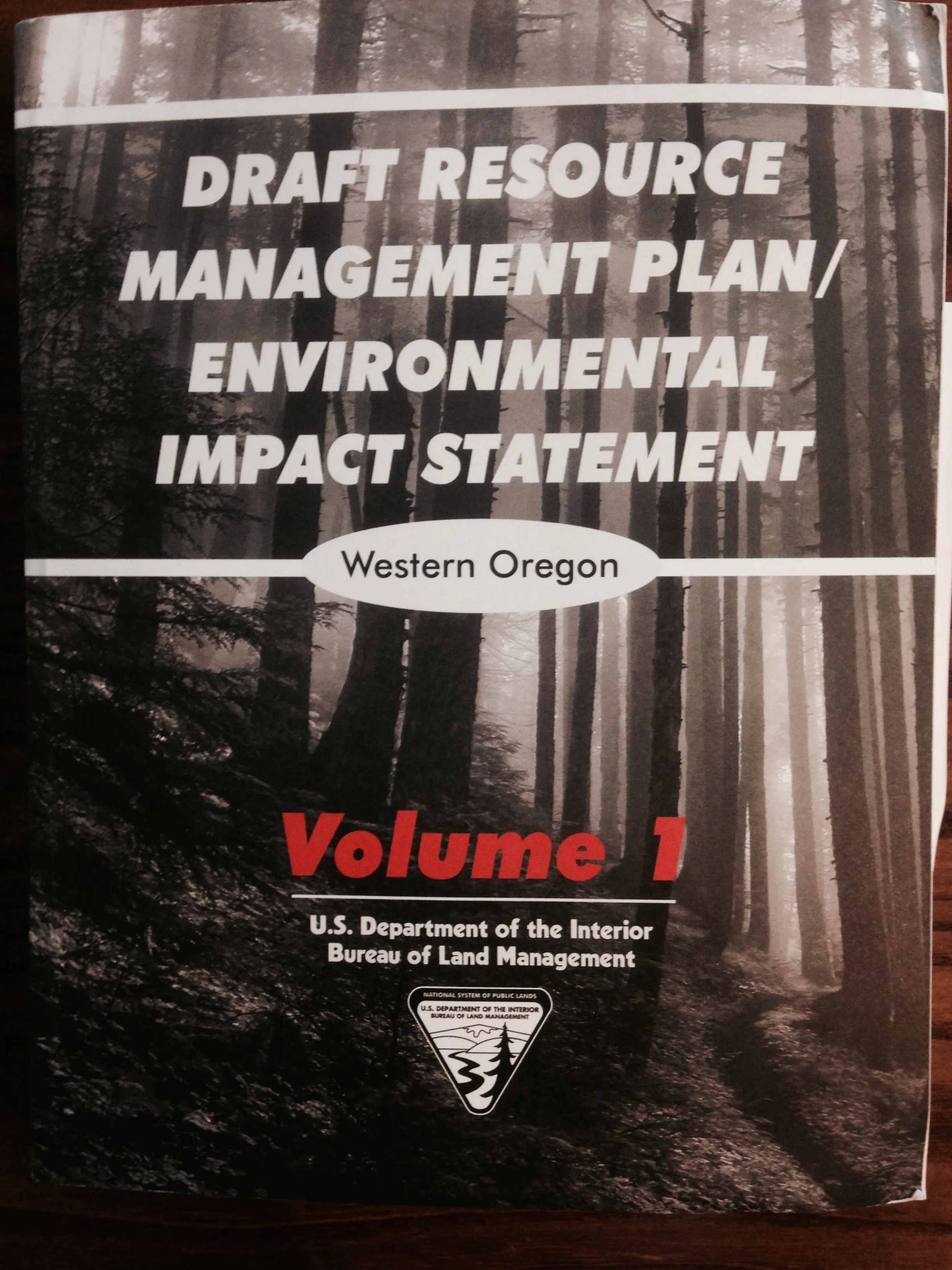
On August 5, the Bureau of Land Management (BLM) signed a management plan for western Oregon, largely ignoring a formal protest from 22 conservation and fishing groups. The BLM plan eliminates protections for streamside forests, increases clearcutting in wet forests, and removes 2.6 million acres of federally managed public forests from the 1994 Northwest Forest Plan
The 1937 O&C Act overhauled the timber management and revenue distribution scheme. It allowed the federal government to pay fifty percent of gross timber revenues directly to the O&C counties, plus twenty five percent (for unpaid Railroad property taxes) to O&C lands. In 1953 Congress directed 25% of the revenue to road building and other capital improvements on the O&C lands, leaving only 50% paid to counties. These payment schemes tied timber harvests to county revenues and made county government a champion of increased logging.
We are celebrating the recent victory to protect some of our most prized rivers from proposed industrial strip mining for a period of 20 years. We are hopeful that this victory will stand, even in the Trump administration.
After four local public hearings and thousands of letters to elected officials, support for the Cascade-Siskiyou National Monument has been heard! On Thursday, January 12, 2017, President Obama used his authority under the Antiquities Act to expand the Cascade-Siskiyou National Monument in southern Oregon.