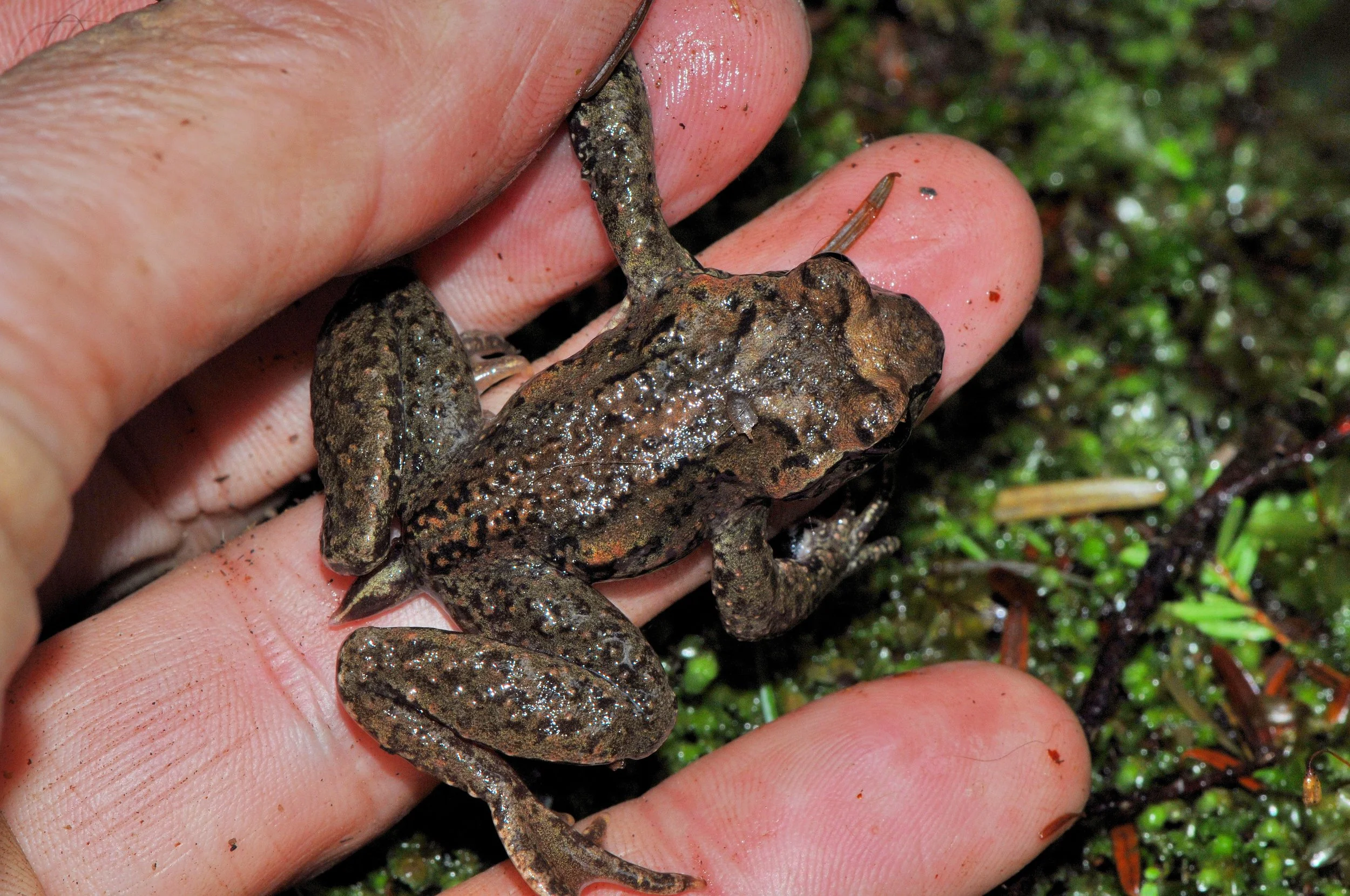
The Coastal Tailed Frog (Ascaphus truei) is a unique amphibian with a restricted range that relies on old-growth forest ecosystems for its survival. Increased logging, climate change, and disturbance to habitat threaten this tiny, silent frog.
The Pacific fisher (Martes pennanti), an ecologically important forest carnivore, lives in low elevation old-growth forests of the northern United States and Canada.
Like humans who need appetizers, main courses and dessert, bees need a variety of wildflowers to choose from to thrive through the summer. Climate change and destruction of habitat decrease both the range and availability of the Franklin’s favorite flowers.
Cat-sized with a luxurious light-brown coat, yellowish chest “bib”, triangular ears and a long tail, the Humboldt marten is a member of the weasel family and a subspecies of the American marten.
Green Sturgeon are truly a prehistoric creature, possessing a skeleton that is more cartilage than bone and rows of bony plates for protection rather than scales.
North American wolverines have been listed as a threatened species in Oregon by the Oregon Department of Fish and Wildlife since 1989. In December 2000, KS Wild and a coalition of groups, led by the Center for Biological Diversity, filed a lawsuit against the U.S. Fish and Wildlife Service for failing to list this wildlands-dependent forest carnivore.