
Funding approved to build Interstate 5's first ever wildlife crossing!
Written by Michael Dotson, Executive Director of the Klamath-Siskiyou Wildlands Center; and Jack Williams & Amy Amrhein, Co-Coordinators of the Southern Oregon Wildlife Crossing Coalition
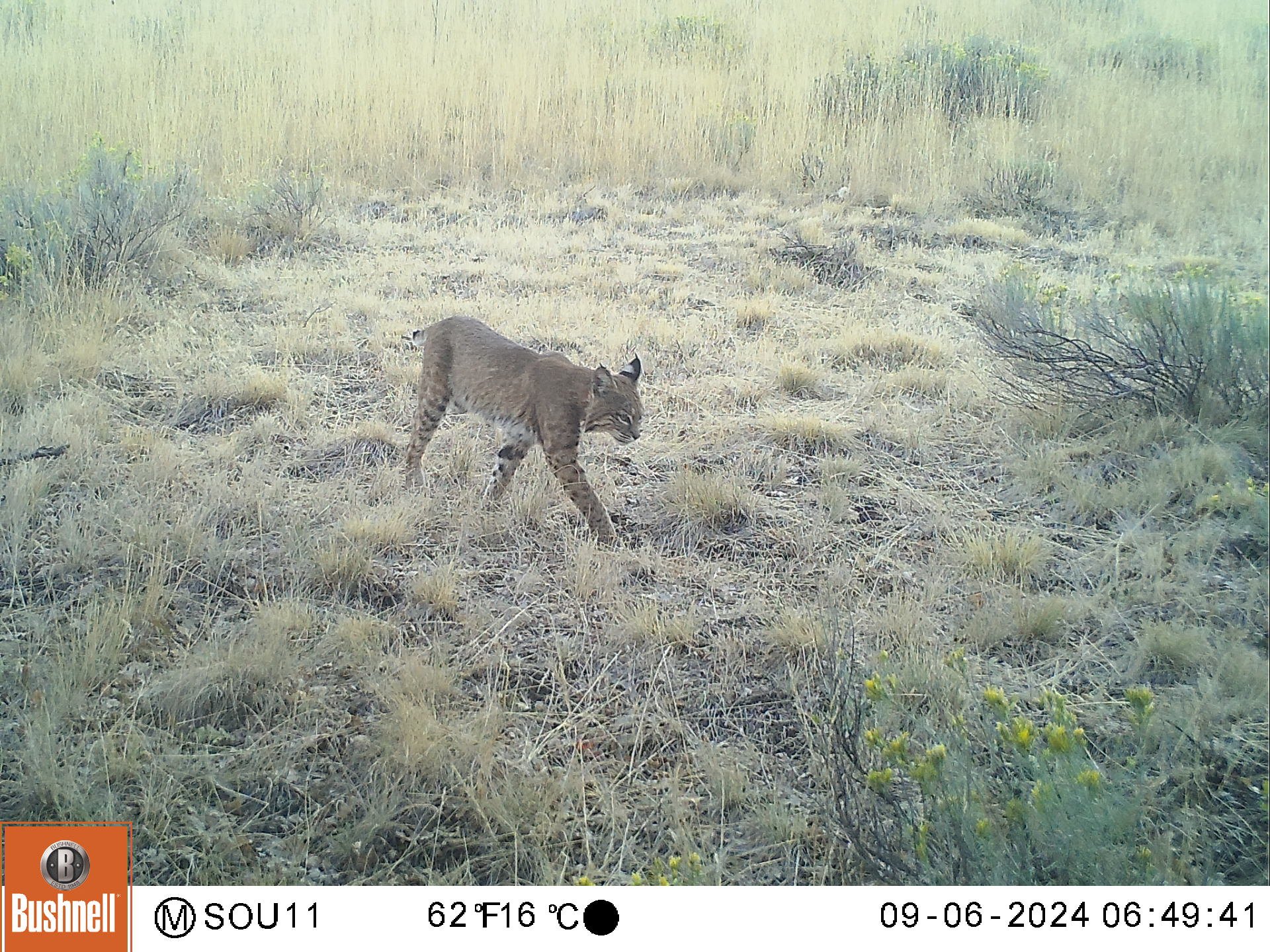
Bobcat captured on a trail camera by Southern Oregon University.
Situated along the Oregon-California border, the Siskiyou Crest is a unique east-to-west migration corridor connecting the Coast Range with the Cascades. For KS Wild, the Siskiyou Crest has been at the center of many campaigns to protect public lands and wildlife for future generations, and twenty years ago an effort was made to enhance wildlife connectivity in this region. At the time, a wildlife overpass was simply a dream of many, and just one of several ways to ensure wildlife could move across a landscape disjointed with roads and highways.
Fast forward to today, and a wildlife overpass in these parts is no longer a dream – it is set to become a reality, thanks to the work of the Southern Oregon Wildlife Crossing Coalition (SOWCC), Oregon Department of Transportation, and our many partners in the region. Southern Oregon will be home to the first wildlife crossing along the entirety of Interstate 5 on the West Coast, restoring the east-west connections that have been severed by the busy interstate that carries about 17,000 vehicles daily in our region. KS Wild has been a partner in SOWCC since its inception a few years ago, and in a relatively short timeline, the coalition has secured more than $30 million in grant funds from the US Highway Department’s Wildlife Crossing Pilot Program!
Last month, after 18 months of negotiations between the state of Oregon and the Trump Administration, Oregon Senators Jeff Merkley and Ron Wyden happily announced an agreement had been reached to fund the Mariposa Wildlife Overcrossing. The location of the overpass lies within the boundaries of the Cascade-Siskiyou National Monument where Interstate 5 cuts a large swath through the southwest corner of the Monument. The Mariposa Overcrossing will be situated about 1.5 miles north of the Oregon-California border in public lands.
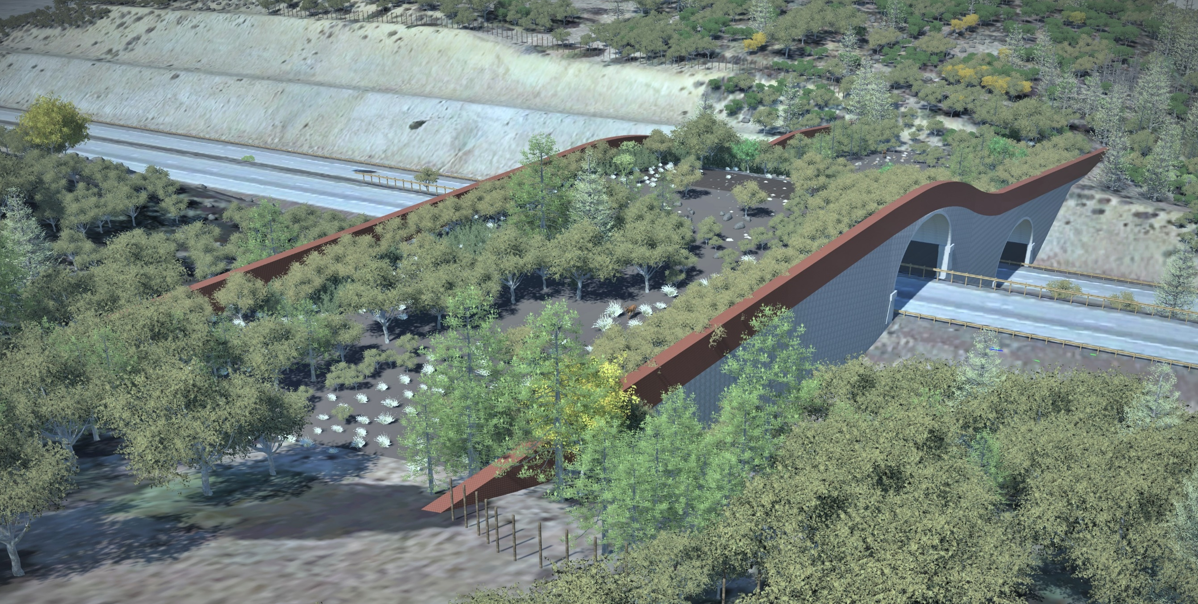
Artist rendering of the Mariposa Wildlife Overcrossing. Credit: ODOT
While ODOT has been working on engineering studies to help reduce the cost of the wildlife overpass, faculty and students at Southern Oregon University have been reviewing millions of images from wildlife cameras set up along this stretch of Interstate 5 south of Ashland. Professor Karen Mager and her students have been collecting images and videos from the past two years to better understand what animals could end up benefitting from the wildlife overcrossing. Dozens of species will benefit from the wildlife overcrossing, including larger species like black bear and elk, rare species like the Pacific fisher, and a host of smaller species. Even pollinators will benefit, for which the Monument provides habitat for an amazing diversity – more than 120 species of butterflies.
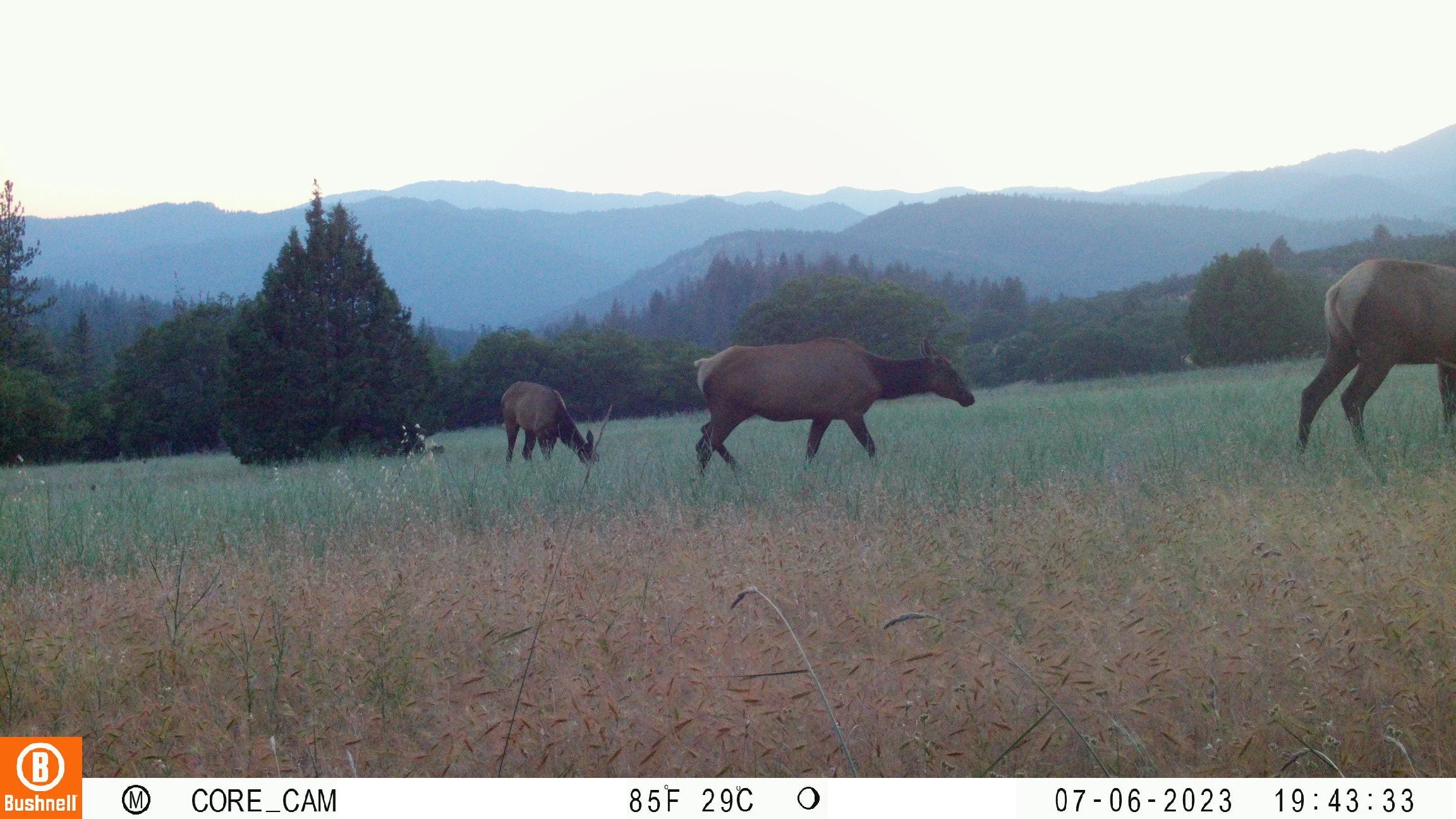
An elk herd traveling through the Cascade-Siskiyou National Monument. Captured on a trail camera by Southern Oregon University
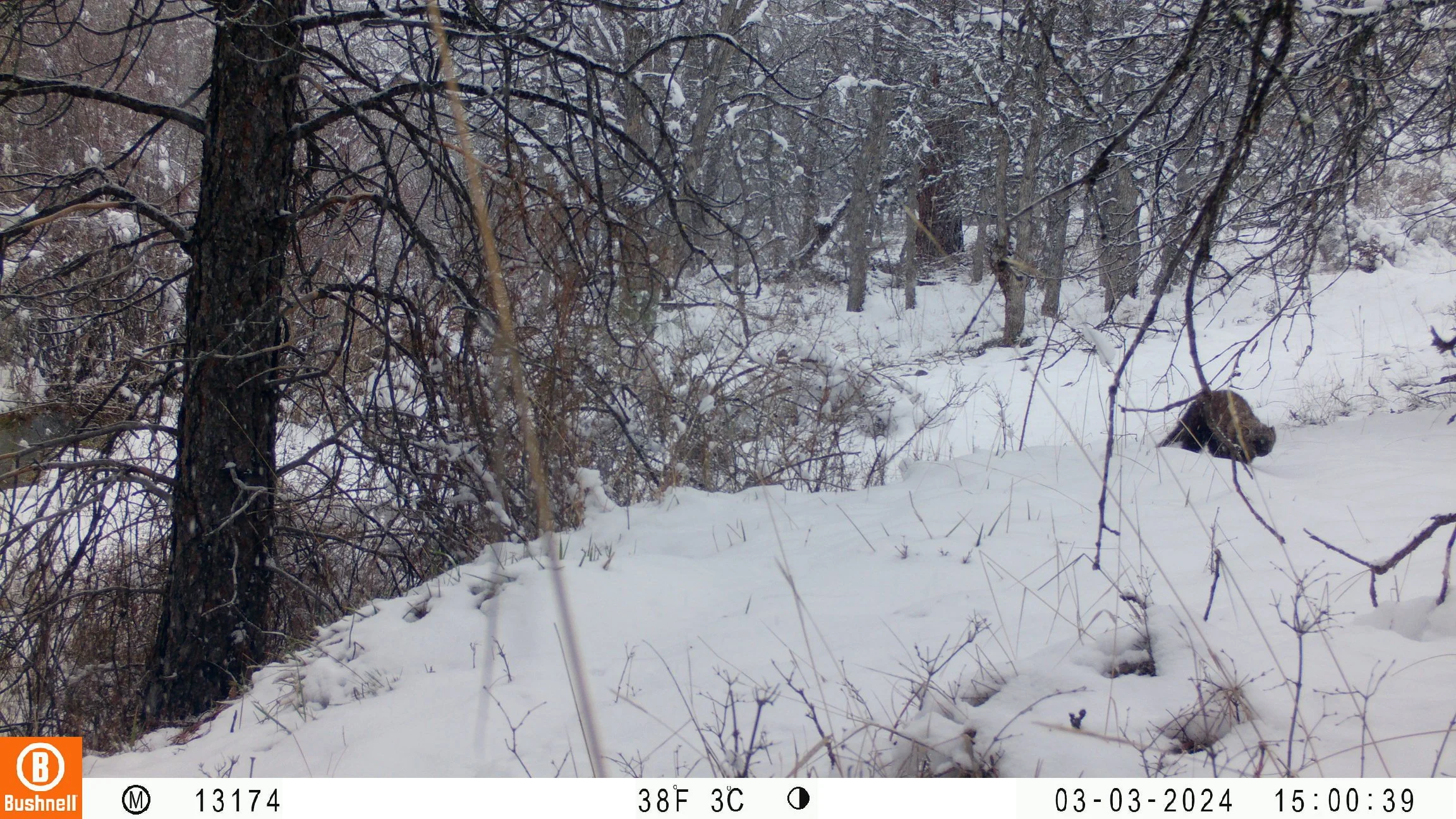
An Pacific fisher migrating through the snow nearby I-5. Captured on a trail camera by Southern Oregon University
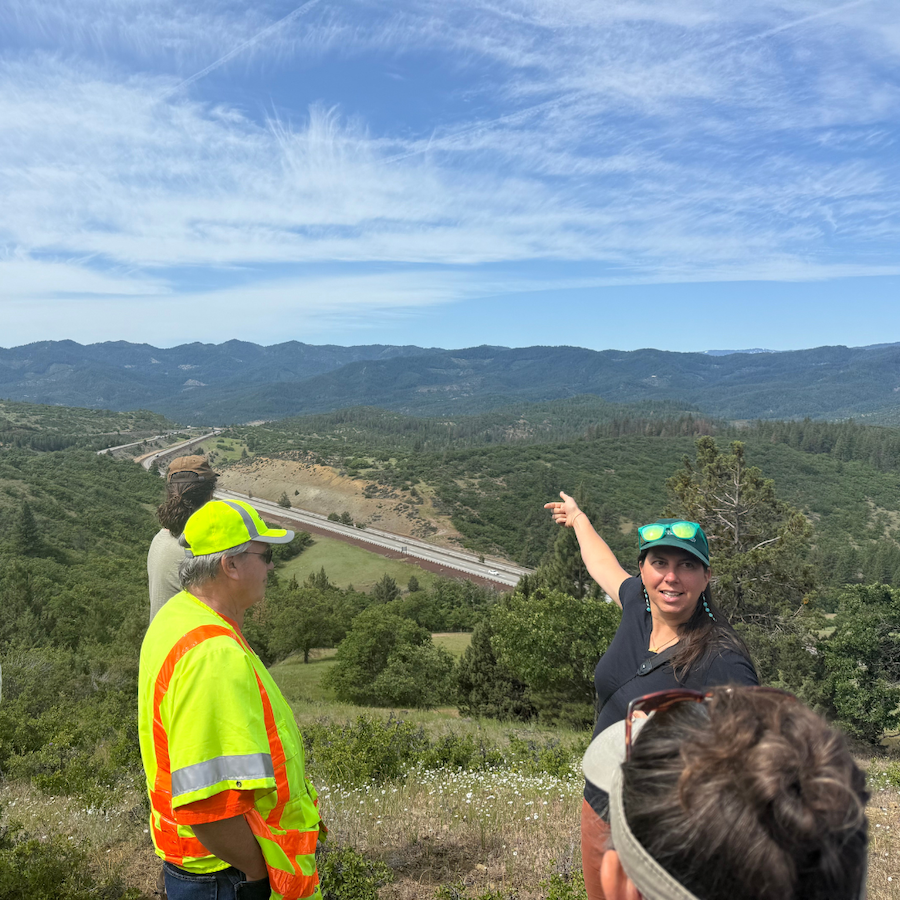
Dr. Karen Mager of Southern Oregon University pointing out where the Mariposa Wildlife Overcrossing will be built over Interstate 5. Photo credit: Haleigh Martin
Wildlife-vehicle collisions are expected to be reduced by 90% or more in the project area. That means a safer ride for all of us. With funding secured from the Wildlife Crossing Pilot Program, ODOT and their staff will be working to develop requests for proposals and contracts over the next year or so. If all goes according to plan, construction could begin as early as 2028 and take less than a year for completion.
You can keep up with the latest from the Southern Oregon Wildlife Crossing Coalition at their website or on Facebook and Instagram.